


By the MrDadhiwala Editorial Team
In the world of digital branding and viral marketing, we often talk about “market disruption.” But long before the first hashtag was ever typed, a one-eyed sailor with a gravelly voice and a pipe-tool for every occasion was busy disrupting the entire world.
From saving the spinach industry to naming the world’s most famous off-road vehicle, the history of Popeye the Sailor Man is a masterclass in cultural impact. As we dive into the archives for MrDadhiwala.com, we’re uncovering why this underdog from 1929 is still the ultimate blueprint for a “strong to the finish” brand.
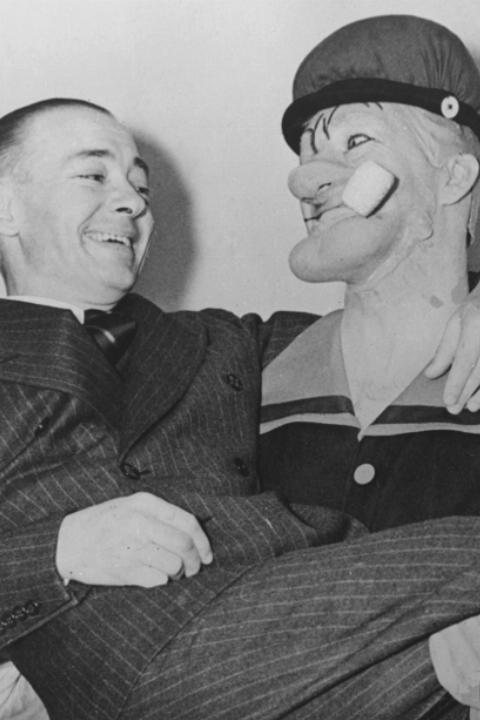
The Man Behind the Muscle: Frank “Rocky” Fiegel
Every great character needs a soul, and Popeye’s soul belonged to a real-life brawler. Creator E.C. Segar modeled the sailor after Frank Fiegel, a local legend from Chester, Illinois. Known for his “hardened physique” and a penchant for fighting, Fiegel was a bartender who lived the tough-guy life Popeye eventually immortalized. In a beautiful twist of fate, the International Popeye Fan Club eventually placed a headstone on Fiegel’s unmarked grave in 1996, finally honoring the man who sparked a legend.
The 33% Growth: A Great Depression Success Story
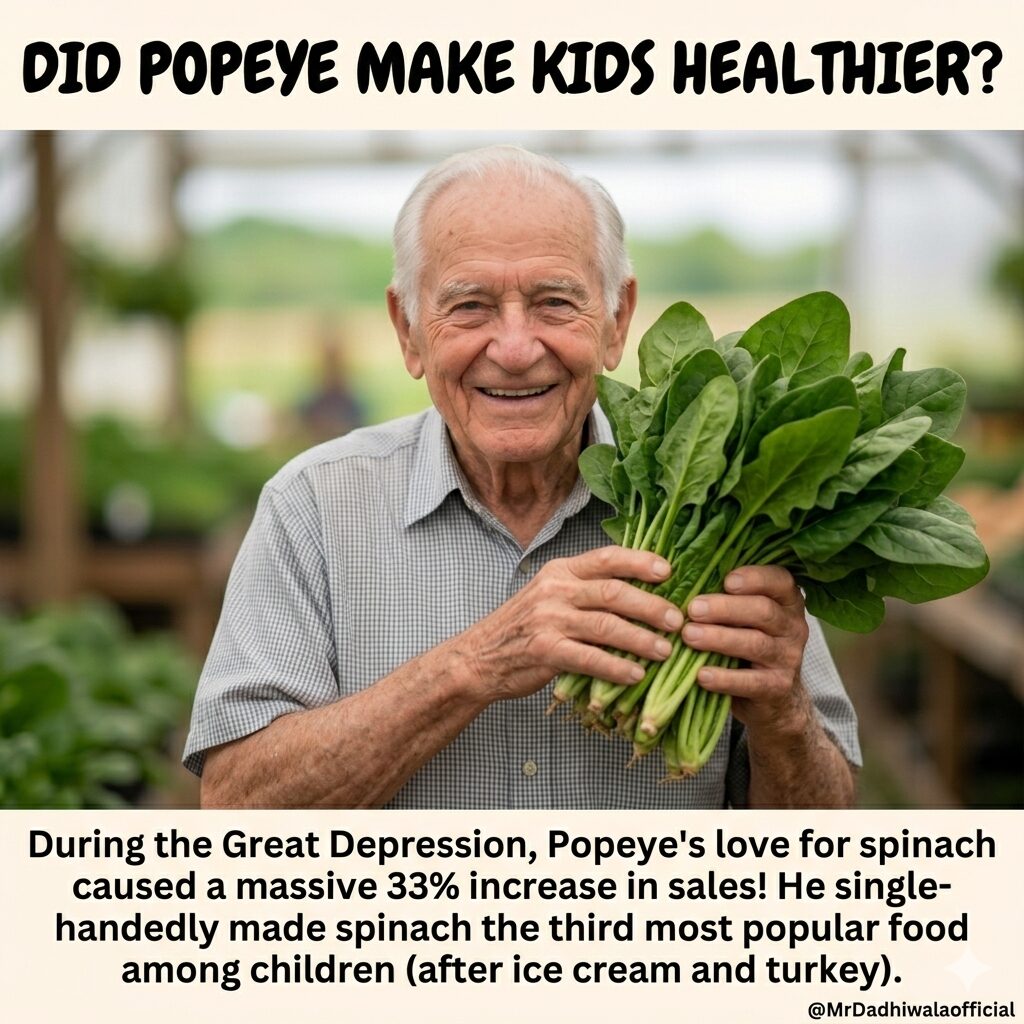
While brands today struggle for a 2% conversion rate, Popeye managed to increase global spinach sales by a staggering 33% during the Great Depression. At a time when nutrition was scarce, he convinced an entire generation of children that greens were the secret to superhuman strength. In fact, spinach was once voted the third most popular food among kids—trailing only behind ice cream and turkey. That is the power of authentic influencer marketing.
Olive Oyl: The Original Leading Lady
History often forgets that Olive Oyl wasn’t just a “damsel in distress”—she was the original star. She debuted in the Thimble Theatre comic strip a full decade before Popeye ever set foot on a pier. Originally paired with a boyfriend named Harold Hamgravy, Olive was the central figure of the series. When Popeye entered as a side character for a single story arc, the audience’s reaction was so explosive that he became the permanent lead.
The Linguistic Legacy: From “Wimps” to “Jeeps”
You might not realize it, but you speak “Popeye” every single day. The character J. Wellington Wimpy, known for his cowardice and hamburger obsession, gave us the word “Wimpy.” Meanwhile, the term “Doofus” found its wings through a character named Dufus.
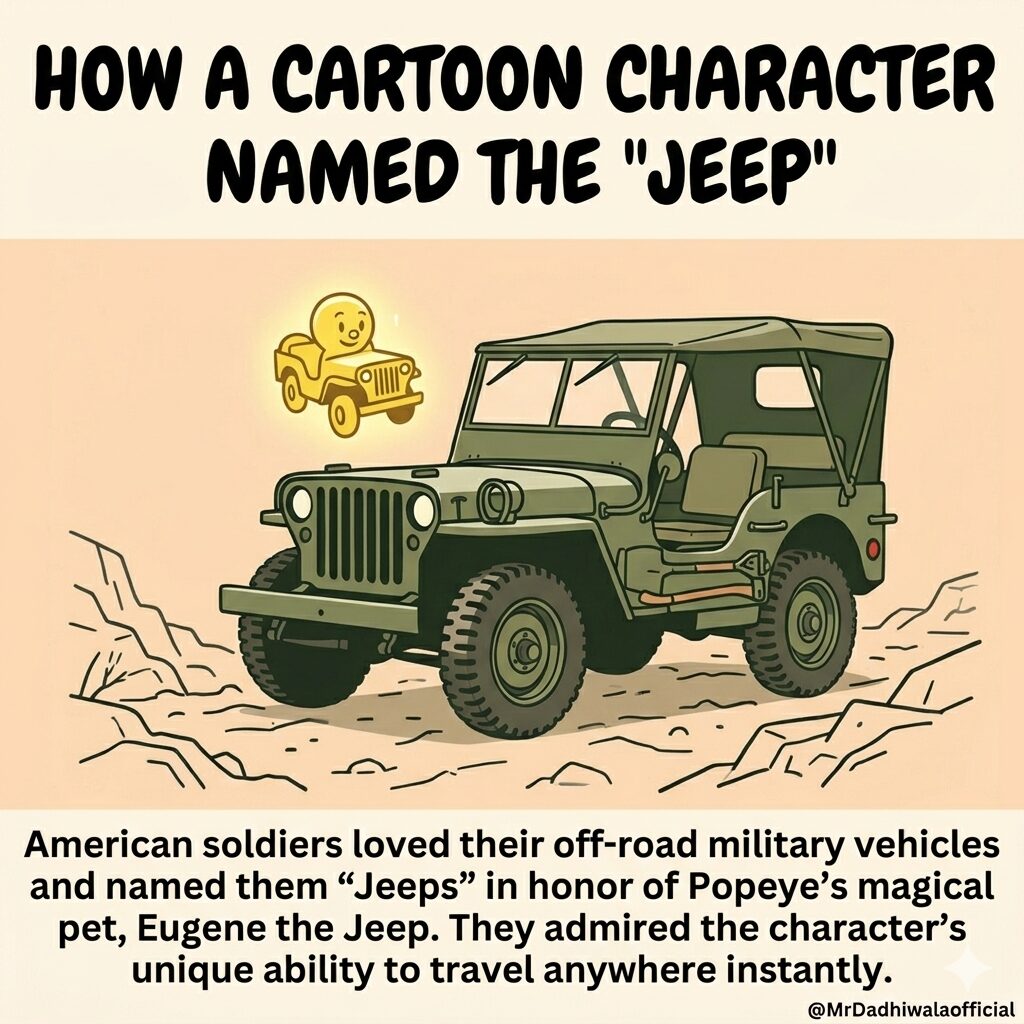
Perhaps the most iconic branding crossover in history is the Jeep. American soldiers were so fond of Popeye’s magical pet, Eugene the Jeep—a creature that could travel anywhere and solve any problem—that they nicknamed their all-terrain military vehicles after him. The name stuck, and an automotive empire was born.
The Divine Connection
In one of his most legendary lore drops, Popeye revealed to his nephews that he is a direct descendant of the demigod Hercules. According to the sailor, his ancestor originally gained his strength from inhaling garlic! Popeye eventually swapped the garlic for spinach, but the celestial DNA remains, explaining his ability to punch through solid steel and survive the impossible.
The MrDadhiwala Perspective
Popeye the Sailor Man represents the core of what we value: authenticity, resilience, and a signature style. He didn’t need a fancy suit or a perfect vocabulary; he just needed a can of spinach and a sense of justice.
Whether it was being the first cartoon character to ever receive a public statue (Texas, 1937) or launching Robin Williams’ film career in 1980, Popeye proves that if your brand is built on a “Rocky” foundation, it will never go out of style.
Stay Informed. Stay Strong.
For more deep dives into the icons that shaped our culture, keep it locked to MrDadhiwala.com.